

子供(成長期)
分子栄養学「亜鉛不足の子どもは実は多い?日本人小児187人の血液検査でわかった最新研究」


亜鉛は体内で合成できず、まとまった量を貯蔵しておく仕組みのないミネラルです※1。そのため、十分な亜鉛を体内に保つには、毎日の食事からの継続的な適量摂取が欠かせません※1、※2。
2026年に発表された最新の研究では、一見健康に見える日本の子どもたちの中にも、亜鉛不足が広く隠れている可能性が示されています※3。
目次
【2026年最新研究】日本人小児における亜鉛不足の可能性
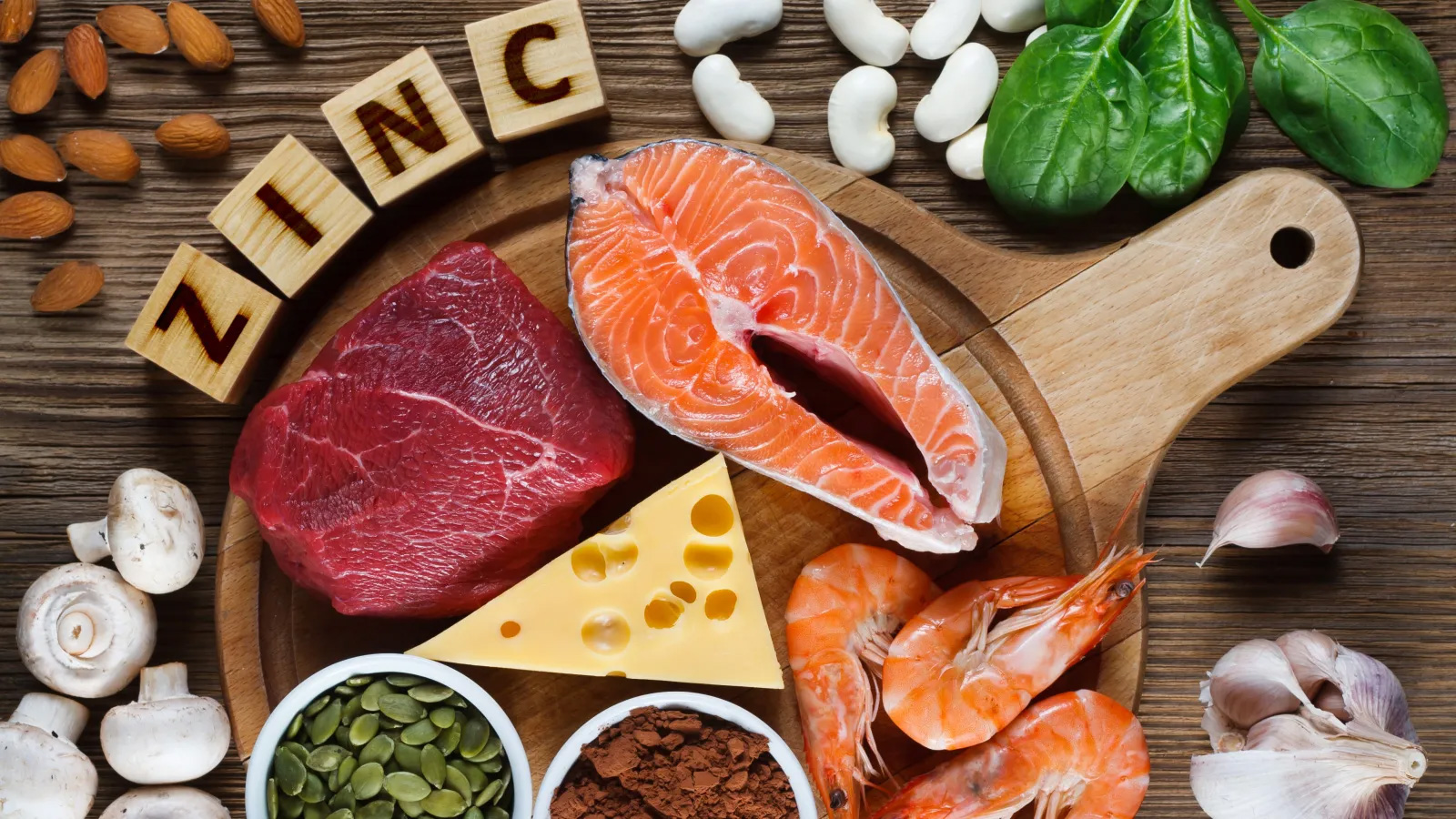
亜鉛は、成長※4・健康な皮膚※5・免疫機能※6、※7などに関わる大切なミネラルのひとつです。
2026年に発表された論文では、10歳未満の健康な日本人の子ども187人を対象に、血液中の亜鉛濃度(血清亜鉛濃度)が調べられました※3。
日本臨床栄養学会の「亜鉛欠乏症の診療指針2018」による基準(血清亜鉛濃度80µg/dL未満を低亜鉛血症とする)※8に基づいて判定したところ、驚くべきことに対象児の74.3%が低亜鉛血症に該当したと報告されています※3。
今回の対象者が郊外と都市部が混在する地域にある医療機関にて鼠径ヘルニア・臍(さい)ヘルニアの手術を選択した小児に限られていること、都市部特有の「調理が簡単な高炭水化物加工食品」を多く含む食習慣がある可能性など、今回の研究にはさまざまな限界があることも述べられています※3。
しかし一見すると健康に見える日本の子どもたちの間にも、目に見えにくい「隠れ亜鉛不足」が広く隠れている可能性が示されています※3。
体の中でどんな働きをしている?亜鉛の分布と重要な役割
亜鉛は体内で合成できず、まとまった量を貯蔵しておく仕組みのないミネラルです※1、※2。
体内の亜鉛の多くは筋肉に約50~60%、骨に約30%、皮膚(4.2%)、肝臓(3.4%)の割合で存在することが報告されています※2、※9。残りの亜鉛は全身のあらゆる組織や体液、分泌物に分布しており、血液中にあるのはごくわずか(全身の1%未満)とされています※9。
亜鉛は体内で「酵素(体の中の化学反応を助けるタンパク質)」の働きを助ける「補因子(サポーターのような存在)」として、300種類以上の酵素に関わっています※10、※11。
さらにヒトの体にあるタンパク質のうち、約10分の1(約2,800種類)が亜鉛と結合すると推定されており、タンパク質がしっかり働くためになくてはならない存在であると考えられています※2、※12。
(※ミネラルって何?上手なミネラル摂取が分子栄養学的健康のもと)
成長・筋肉・骨・ホルモン・免疫・脳を支える亜鉛のマルチな働き
亜鉛は成長※4・健康な皮膚※5・消化管※13・生殖器※14、※15・免疫機能※6、※7に関わるほか、骨の材料であるコラーゲンの合成や骨代謝回転(骨を作る細胞(骨芽細胞)と壊す細胞(破骨細胞)の調整)にも関与するとされています※16、※17、※18、※19。
亜鉛はさらに、ホルモンの分泌と安定にも関わります。例えば、血糖値を下げるホルモンである「インスリン」には亜鉛が不可欠です。インスリンは出番に備えて6個一緒に結合した形(結晶)で膵臓のβ細胞の中(インスリン顆粒)に蓄えられますが、その結晶を2つの亜鉛イオンがしっかりと支えることで安定して貯められます※20、※21、※22。
また、亜鉛は、甲状腺放出ホルモン(TRH)と甲状腺刺激ホルモン(TSH)の合成を調節するなど、甲状腺ホルモンの正常な機能にも関与するとの報告があります。甲状腺ホルモンは、タンパク質の同化作用や、小児の基礎代謝率と骨の成長の増加など、多くの生理機能に関与する重要なホルモンです※23。
亜鉛は正常な脳機能にとっても重要であるとされ※24、※25、適切な量の亜鉛は健康維持に不可欠である旨が指摘されています※1。
(※食欲の秋、血糖値コントロールに必要なインスリンに関わる亜鉛のお話)
【亜鉛欠乏症を防ぐには】毎日の食事摂取がカギ
しかし、人間の体は体内で亜鉛を合成することができません。
また、いざというときに亜鉛をまとめて蓄えておく大きな専用の貯蔵庫も持っていないため、体内の適切なレベルを維持するには毎日、適切な量の亜鉛を食事から継続して補うことが極めて重要であることが指摘されています※9、※2。
亜鉛は体に貯蔵しておけない栄養素だからこそ、日々の食事でこまめに補うことが大切です※1。
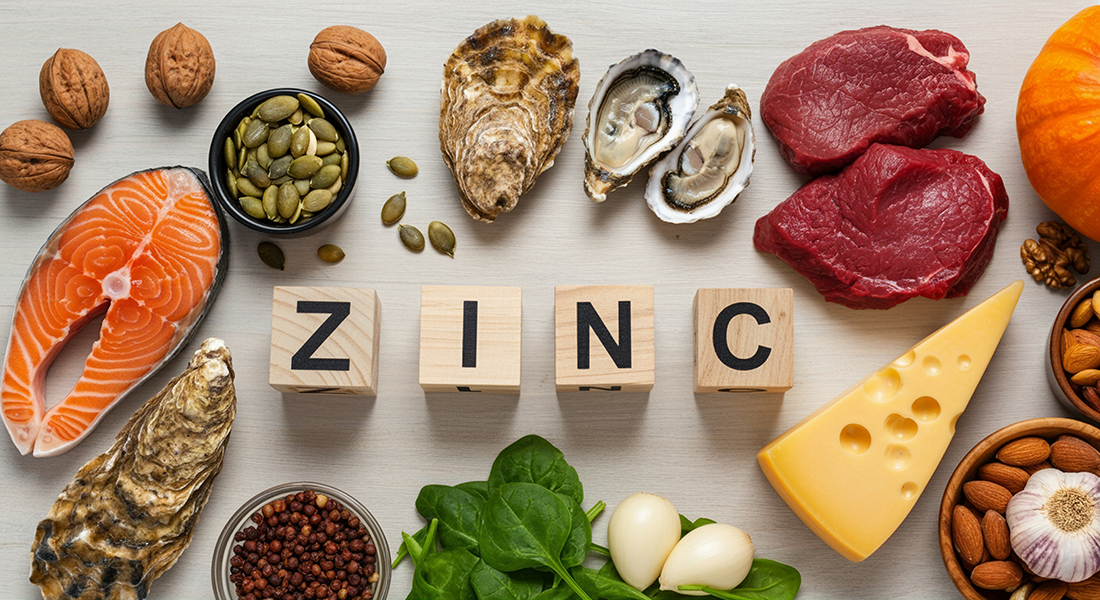
亜鉛を多く含む食品には、魚・牡蠣・肉・ナッツ類・大豆・卵などがあります※2。
※亜鉛を多く含む食品を参考に、分子栄養学のお勧めする栄養素バランスの良い3回の食事をよく噛んで食べ、実りの多い秋を楽しく過ごすヒントとしていきましょう。
※1 Gibson, RS., et al. Indicators of zinc status at the population level: a review of the evidence. Br J Nutr. 2008:99 Suppl 3:S14-S23.

※2 Stiles, LI., et al. Role of zinc in health and disease. Clin Exp Med. 2024;24(1):38.

※3 Sasaki, T., et al. Analysis of serum zinc levels in healthy Japanese children under the age of 10. J Trace Elem Med Biol. 2026:94:127841.

※4 Krebs, NF., et al. Zinc deficiency in infants and children: a review of its complex and synergistic interactions. Paediatr Int Child Health. 2014;34(4):279-288.

※5 Ogawa, Y.,et al. Zinc and Skin Disorders. Nutrients. 2018;10(2):199.

※6 Wessels, I., et al. Zinc as a Gatekeeper of Immune Function. Nutrients. 2017;9(12):1286.

※7 Skrajnowska, D., et al. Role of Zinc in Immune System and Anti-Cancer Defense. Nutrients, 2019;11(10):2273.

※8 Kodama, H.,et al. Japan’s Practical Guidelines for Zinc Deficiency with a Particular Focus on Taste Disorders, Inflammatory Bowel Disease, and Liver Cirrhosis. Int J Mol Sci. 2020;21(8):2941.

※9 Maares, M., et al. A Guide to Human Zinc Absorption: General Overview and Recent Advances of In Vitro Intestinal Models. Nutrients. 2020;12(3):762.

※10 Chasapis, CT., et al. Recent aspects of the effects of zinc on human health. Arch Toxicol. 2020;94(5):1443-1460.

※11 Prasad, AS. Discovery of human zinc deficiency: its impact on human health and disease. Adv Nutr. 2013;4(2):176-190.

※12 Andreini, C., et al. Counting the zinc-proteins encoded in the human genome. J Proteome Res. 2006;5(1):196-201.

※13 Wapnir, RA. Zinc deficiency, malnutrition and the gastrointestinal tract. J Nutr. 2000;130(5S Suppl):1388S-1392S.

※14 Te, L., et al. Correlation between serum zinc and testosterone: A systematic review. J Trace Elem Med Biol. 2023:76:127124.

※15 Garner, TB., et al. Role of zinc in female reproduction. Biol. Reprod. 2021;104(5):976-994.

※16 Molenda, M., et al. The Role of Zinc in Bone Tissue Health and Regeneration—a Review. Biol Trace Elem Res. 2023;201(12):5640-5651.

※17 Pepa, GD., et al.  Microelements for bone boost: the last but not the least. Clin Cases Miner Bone Metab. 2017;13(3):181-185.

※18 Saltman, PD., et al.  The role of trace minerals in osteoporosis. J Am Coll Nutr. 1993;12(4):384-389.

※19 Yamaguchi, M. Role of nutritional zinc in the prevention of osteoporosis. Mol Cell Biochem. 2010;338(1-2):241-254.

※20 Hirsch, IB., et al. The Evolution of Insulin and How it Informs Therapy and Treatment Choices. Endocr Rev. 2020;41(5):733-755. 2020;41(5):733-755.

※21 Tamura, Y. The Role of Zinc Homeostasis in the Prevention of Diabetes Mellitus and Cardiovascular Diseases. J Atheroscler Thromb. 2021;28(11):1109-1122.

※22 Dunn, MF. Zinc-ligand interactions modulate assembly and stability of the insulin hexamer -- a review. Biometals, 2005;18(4):295-303.

※23 Severo, JS., et al. The Role of Zinc in Thyroid Hormones Metabolism. Int J Vitam Nutr Res. 2019;89(1-2):80-88.

※24 Mezzaroba, L., et al. The role of zinc, copper, manganese and iron in neurodegenerative diseases. Neurotoxicology. 2019:74:230-241.

※25 Gower-Winter SD., et al. Zinc in the central nervous system: from molecules to behavior. BioFactors. 2012; 38(3):186-193.